
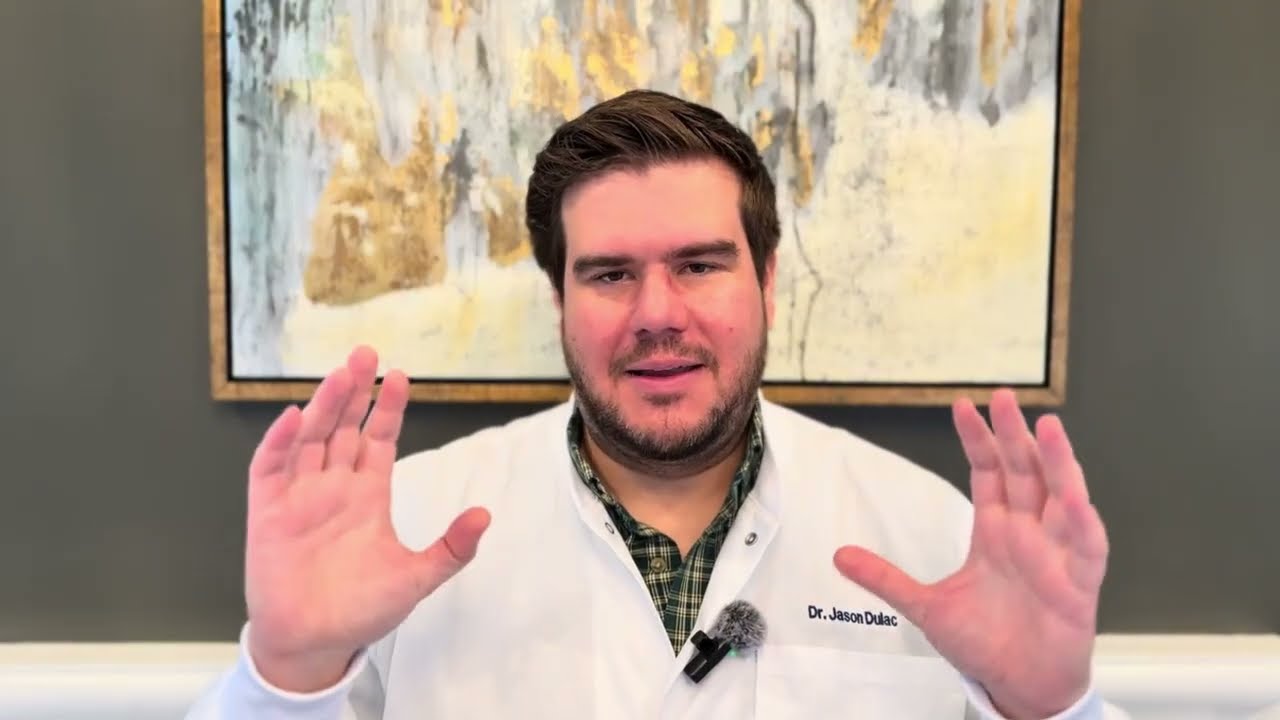
What is the connection between oral health and systemic health?
For some reason, the mouth got separated from the rest of the body years ago. There are dentists, there are doctors, and it's kind of led to this two-path thought that the mouth isn't as important. It's not covered by healthcare, whatever, whatever. It's unfortunate that that happened because every single study that comes out about literally everything says that if you have a chronic infection in your mouth, you're going to increase your risk of heart disease, diabetes, stroke, heart attack, cancer, Alzheimer's, like literally everything.
Dental cavities are a bacterial infection in your tooth that, to get into the body, usually has to go through the nerve of the tooth, which means it usually has to get pretty big. But it's a chronic bacterial infection in your mouth. It has been related to Alzheimer's in numerous studies. If you want to see some of these studies, they're on my Facebook page. Hundreds and hundreds of studies relating what goes on in your mouth to the rest of your body.
Patients with healthy teeth and gums live 7 to 10 years longer. And that's just from chewing health. It's those chronic conditions. That's not even getting into airway management, which I can help you with, too, and snoring and sleep apnea.
Cavities are related to Alzheimer's. Gum disease is a chronic infection in the gums that gets into the bloodstream. There's a higher risk for failure of artificial heart valves, joints, stroke, heart attack, anything blood vascular. It gets in, and it gets on the plaques, and it makes you higher risk. The chronic inflammation makes you a higher risk for cancer, notably pancreatic cancer. Diabetes, there's a high correlation between gum disease and diabetes. And getting your gums healthy can help with your diabetes. And helping with your diabetes can help with your gum health.
What I'm trying to impress is that the mouth is kind of the entryway to the body, and chronic infection in your mouth will get to the rest of your body.
How can dentures impact your health?
In addition to that, patients with dentures don't chew as well. They don't interact with each other socially as well. Food is very social in our lives. And when you can't interact with others, there are a lot of studies that show that your end-of-years decline more quickly. Your health declines more quickly. You die sooner. When you have dentures, you can't eat apples, fresh fruits, meats, like all the good, healthy stuff for you. You can't eat it as well.
Luckily, now we can do dental implants or implant-retained dentures, and you can have some more chewing force back. A denture has about 25% chewing force. Implants will get you a bunch more of that natural chewing force.
How can pregnancy affect dental care?
Let's talk a little bit about pregnancy-related outcomes. Pregnancy diabetes, low birth rate, all that stuff. The risk of that increases when the oral health of the mother isn't good. We usually don't do a lot of work in the third trimester just for comfort reasons. But when I do do it, I always tell the patient, "Look, if you need to move, go on your side. We've got pillows. We've got blankets. We've got headrests." You've got a hundred different things to make you comfortable in the office.
But there are no restrictions on dental treatment during pregnancy. The only thing we avoid is giving narcotics. If there were an extraction, that would get through your body, same to the baby. That would be bad. Anesthetic, x-rays, fillings, cleanings, all safe. All, if left undone or left untreated, will make your baby's pregnancy risk outcomes go up.
Understanding Care at Dulac Dental of Springfield
The first thing I do in my office when a patient comes in, whether it's a pregnant patient or just someone off the street who hasn't been in a while, someone who has a problem, is I say thank you. Thank you for caring enough about yourself to come in and get this taken care of. Thank you for caring enough about your baby to come in and get this taken care of because it really will impact your life.
When a patient refers another patient, I say, "Thank you for caring enough about your friend to have them come in and be a patient so we can help them get healthier." Because we're not just talking about your mouth. We're talking about your social interaction. We're talking about your overall health. We're talking about your happiness and your lifespan. And that's even before we get into snoring and sleep apnea.
Can a dentist help me with snoring and sleep apnea screening?
I screen for snoring and sleep apnea in all patients in my office, starting at child growth and development all the way through adults. I've diagnosed and treated more sleep apnea, I think, than the patient's physician. I don't know why it's not on the intake forms. It should be. Untreated sleep apnea will take a decade off your life. No question. And it'll increase all those bad things: stroke, heart attack, diabetes, all that stuff.
There are some things in medicine that the system is not designed to optimize for health, and I don't get paid anything to do it, but it's on every screening form because I want my patients to live happier, healthier, longer lives. I don't care.
What are the treatment options for snoring and sleep apnea?
There are three dental-medical treatments. There's one dental treatment for snoring and sleep apnea. If it's snoring, it's not a health risk. It's just an inconvenience to a sleeping partner. But I usually ask the guys, what's cheaper, this appliance or a divorce? It really does negatively impact marriages 100%.
But if it's sleep apnea, you absolutely have to do something about it. I don't care if you get a CPAP from your doctor. I don't care if you get the new Inspire thing that stimulates the airway to stay open. I don't care if you get an airway surgery with ENT to open it up or get a dental appliance to pull the jaw forward. But you've got to do something to open up your airway.
What is sleep apnea, and why does "mild" still matter?
Sleep apnea is the back of the tongue collapsing against the back of the throat, and snoring is it flapping. Sleep apnea is it getting stuck there 10 seconds or more, five or more times per hour. So, five to 15 times per hour is mild sleep apnea. I wish they wouldn't call it that. I wish they would call it takes this many years off your life, takes this many years off your life, and will kill you immediately.
Because people are like, it's mild. I don't need to do anything about it, it's mild. Well, 15 times, how many times do you sleep a night? That's over a hundred. So a hundred times per night, when you're supposed to be sleeping and your heart rate's supposed to be low, you can't breathe, and your heart rate skyrockets up, and you don't get good sleep, and your risk of death increases.
Before learning about sleep apnea, I used to think, " Oh, I'd like to pass, you know, nicely in my sleep." Well, really what happens is you have sleep apnea, you can't breathe, you have a heart attack or stroke at night, and you die and just don't wake up. It is something I'm somewhat passionate about.
You'll be reimbursed by your medical insurance. I have a whole sheet of what to ask your healthcare insurance about how to get reimbursed for those. We're here to help. We're here to make you healthier.
Your health matters to us, and we’re here to support you every step of the way. If you’re looking for expert dental care near Springfield, VA, call (703) 451-4500 or email [email protected] to learn more. Ready to get started? Schedule your appointment below.